

A clear cost breakdown of residential ground mounted solar panels helps homeowners evaluate their investment options. Unlike rooftop systems, ground mounted installations require additional civil works, support structures, and extended cable runs, all of which influence the final price. This article examines the major cost components—hardware, mounting systems, installation labor, and long-term value factors—based on verified industry data and manufacturer specifications.
Hardware Costs: Modules and Balance of System
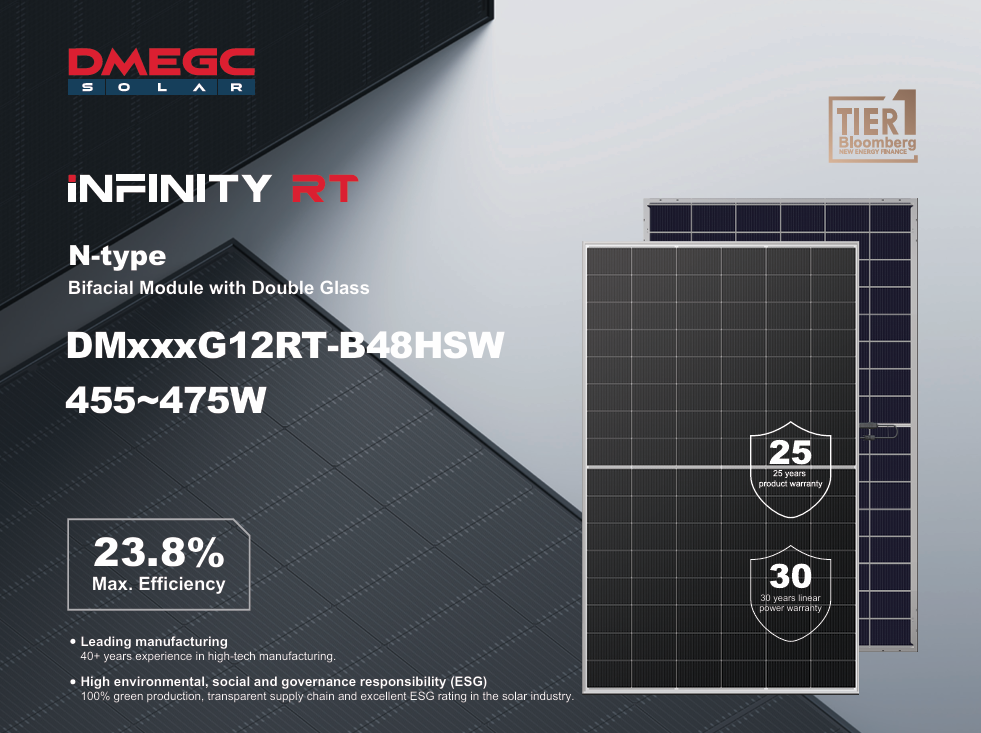
The largest portion of any cost breakdown for residential ground mounted solar panels is the photovoltaic modules themselves. Module prices vary by cell technology, efficiency rating, and warranty terms. Higher efficiency modules cost more per watt but reduce the number of panels and associated mounting hardware. DMEGC Solar manufactures cells and modules with substantial annual capacities, enabling consistent quality and competitive pricing. Their double-glass modules offer an extended product warranty and a power warranty lasting three decades, with first-year power retention above ninety-eight percent. Beyond modules, the balance of system includes inverters, DC cabling, combiner boxes, and disconnect switches. For residential ground mounted solar panels, trenching costs for buried cables between the array and the home add noticeable expenses depending on distance. DMEGC Solar has obtained ISO and IEC certifications, ensuring their modules meet international safety and performance standards, which reduces long-term replacement risks.
Mounting Structures and Foundation Expenses
The second major cost element of residential ground mounted solar panels is the racking system and foundations. Ground mounts use galvanized steel or aluminum frames anchored to concrete footings, driven piles, or helical screws. Fixed-tilt racks are cheaper; trackers boost yield but cost more. Mounting hardware accounts for a substantial share of project cost. Soil conditions affect foundation expenses—rocky terrain needs drilling, sandy soil may require deeper footings. DMEGC Solar provides modules for various configurations, including Infinity series with Y-framed and EC-framed designs. Their products are PVEL “Top Performers,” withstanding wind and snow loads. When evaluating residential ground mounted solar panels, homeowners should request soil testing and engineering assessments to avoid foundation cost overruns.
Installation Labor and Permitting Fees
The third component in the cost breakdown of residential ground mounted solar panels is professional installation and administrative fees. Ground mounted systems typically require more labor hours than rooftop arrays because of site preparation, trenching, concrete pouring, and module assembly on frames. Permitting costs vary by jurisdiction but include building permits, electrical permits, and sometimes environmental reviews for land disturbance. For residential ground mounted solar panels, an engineering stamp may be required for structures above certain heights. DMEGC Solar maintains local offices and warehouses in multiple countries including the Netherlands, Germany, France, Australia, Brazil, and Japan, providing local marketing, technology support, and service. Their global deployment covers many countries, meaning homeowners can access certified installers familiar with DMEGC Solar’s products. The company’s Altman-Z score ranks among the global PV industry’s strongest, indicating financial health that protects warranty validity. A lower-risk manufacturer adds value to the cost breakdown because future warranty claims remain enforceable.
Long-Term Value: Warranty and Degradation Savings
While not an upfront cost, degradation rates and warranty terms significantly affect the lifecycle cost of residential ground mounted solar panels. Modules with higher annual degradation lose output faster, requiring more panels to meet energy needs over time. DMEGC Solar’s modules offer high first-year power retention and low annual degradation thereafter. Their three-decade linear power warranty guarantees strong output after many years of operation. Standard modules with faster degradation lose more output over time. The cumulative energy difference can offset the premium of quality residential ground mounted solar panels. DMEGC Solar’s parent company, Hengdian Group, has substantial revenue and multiple public companies, ensuring long-term warranty support. In a cost breakdown, homeowners should factor in avoided replacement costs—double-glass modules with extended warranties eliminate premature backsheet failures.
A complete cost breakdown of residential ground mounted solar panels includes module hardware, mounting structures and foundations, installation labor with permits, and long-term value from warranty and degradation performance. DMEGC Solar provides high-efficiency double-glass modules backed by three-decade power warranties, substantial annual cell capacity, and Bloomberg Tier 1 financial recognition. Their parent company Hengdian Group’s strong annual revenue and low debt-to-asset ratio offer homeowners confidence in lasting support. For any residential ground mounted solar panels project, analyzing each cost component against quality indicators leads to a sound investment.

Tel: +86-579-86588826 (Workday 8:30-17:00)
Tel: +31 (0) 8 58200765
Tel: +86-579-86310330 (Workday 8:30-17:00)
+86-579-86310330 (workday 8:30-17:00 GMT+08:00)
+86-579-86588601 (workday 8:30-17:00 GMT+08:00)


Contact Us
Type of your question
- Business Consulting
- Technical Support
- After-sales Service