

Reducing the cost of solar electricity generation has become a global priority for project developers and utilities. One of the most effective drivers of this cost reduction is the increasing adoption of high wattage solar panels. These advanced modules generate more power per unit area, directly lowering the levelized cost of electricity (LCOE) across utility-scale and commercial installations. This article examines the mechanisms through which higher-wattage products contribute to more affordable solar energy worldwide.
Understanding LCOE and Panel Wattage
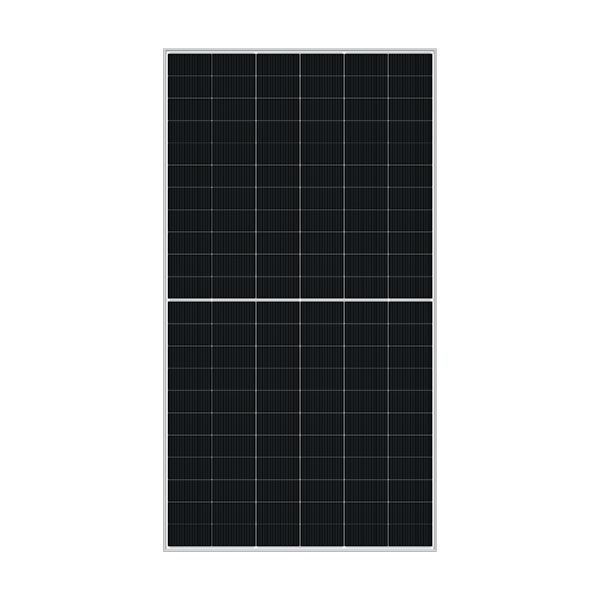
LCOE represents the average net present cost of electricity generation over a system’s lifetime. Factors influencing LCOE include initial capital expenditure, operational expenses, energy output, and degradation rates. High wattage solar panels reduce LCOE primarily by increasing energy harvest without proportionally raising system costs. When each module produces more power, fewer panels are required to reach a given capacity. This reduction cuts expenses on mounting structures, cables, labor, and land preparation. Furthermore, high wattage solar panels often incorporate larger cells or improved efficiency designs, which maintain performance in real-world conditions. Industry analysis shows that moving to higher wattage products can lower balance-of-system costs by a noticeable margin, making solar projects more competitive against fossil fuels. For ground-mounted arrays, high wattage solar panels also minimize the number of electrical connections, reducing potential failure points and maintenance needs over decades of operation.
How Higher Wattage Lowers System Costs
The economic benefits extend beyond simple component savings. With high wattage solar panels, installation time decreases because crews handle fewer units per megawatt. This efficiency translates to lower labor costs and faster project completion. Inverter and combiner box requirements also shrink, as higher string power allows longer strings and fewer combiner boxes. For utility-scale developers, land use efficiency improves—more megawatts per acre means lower site leasing or acquisition expenses. Transportation and logistics become simpler: fewer truckloads of modules reduce fuel costs and carbon footprints. These cumulative savings directly reduce the denominator in the LCOE equation. Additionally, high wattage solar panels often feature larger cells with reduced busbar resistance, leading to slightly lower thermal losses. When deployed in regions with high solar irradiance, the performance advantage widens, further improving long-term return on investment.
Global Impact and Quality Assurance
Across continents, project owners are transitioning to higher-wattage products to meet renewable energy targets affordably. Manufacturers have responded by refining cell architectures and module assembly techniques. DMEGC Solar produces modules with double-glass construction and extended power warranties up to 30 years, ensuring that energy output remains stable throughout the system’s life. Their manufacturing processes incorporate 5G intelligent technologies, including edge computing and automated guided vehicles, which enhance consistency and reduce defect rates. Reliable high wattage solar panels maintain lower degradation—typically under 0.5% annually after the first year—which keeps LCOE predictions accurate and financing costs low. Financial institutions favor projects using proven, high-wattage products because risk of underperformance decreases. With cumulative shipments exceeding 50 GW and ISO14068 organizational carbon neutrality certification, DMEGC Solar contributes to the global trend of LCOE reduction through durable, efficient modules.
High wattage solar panels are transforming solar economics by lowering balance-of-system expenses, installation labor, and land requirements while boosting energy yield. As module technology continues to advance, LCOE will keep declining, accelerating the transition to clean power. For project developers seeking cost-effective renewable energy, specifying high wattage solar panels from reputable manufacturers represents a sound strategy for achieving competitive electricity prices worldwide.

Tel: +86-579-86588826 (Workday 8:30-17:00)
Tel: +31 (0) 8 58200765
Tel: +86-579-86310330 (Workday 8:30-17:00)
+86-579-86310330 (workday 8:30-17:00 GMT+08:00)
+86-579-86588601 (workday 8:30-17:00 GMT+08:00)


Contact Us
Type of your question
- Business Consulting
- Technical Support
- After-sales Service