

For homeowners considering a solar investment, selecting high-efficiency residential solar panels requires careful evaluation of technical specifications, warranty terms, and manufacturer reliability. Unlike standard products, efficient modules generate more electricity per square foot, which matters greatly when roof space is limited or energy needs are substantial. This guide explains the key factors that determine module performance and long-term value, helping homeowners make informed procurement decisions.
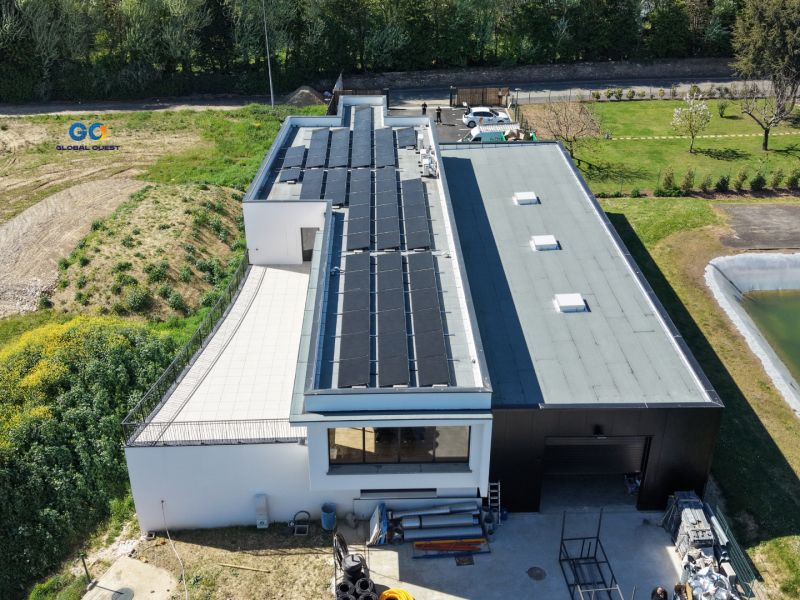
Technology Types That Influence Residential Solar Panels Efficiency
The first factor in selecting best residential solar panels for efficiency involves understanding the underlying cell technology. Monocrystalline silicon remains the standard for residential installations, achieving efficiency levels between 20 and 24 percent in commercial products. Within monocrystalline, n-type technologies such as N-type represent the current upgrade direction for homeowners seeking enhanced performance. N-type residential solar panels offer several distinct advantages over conventional p-type products. They show no light-induced degradation because they lack boron-oxygen complexes, a common issue that reduces initial output in standard cells. Additionally, n-type residential solar panels demonstrate superior temperature coefficients, typically ranging from -0.29 to -0.30 percent per degree Celsius. For hot climates or roofs with limited ventilation, this means higher energy yield on summer afternoons when electricity demand peaks. DMEGC Solar manufactures n-type modules with double-glass construction, achieving module efficiency up to 23.5 percent. Their Infinity RT series integrates advanced tunnel oxide passivation technology, making these residential solar panels suitable for homeowners who want maximum output from limited roof area.
Quality Certifications That Verify Residential Solar Panels Reliability
Beyond efficiency ratings, selecting residential solar panels requires checking independent certifications that validate durability under real-world conditions. The IEC 61215 standard serves as the international benchmark for design qualification and type approval, covering mechanical stress, thermal cycling, damp heat, and hail impact tests. The companion safety standard IEC 61730 ensures electrical insulation and fire resistance. High-quality residential solar panels also undergo PVEL reliability testing, which includes rigorous assessments for potential-induced degradation resistance and light-induced elevated temperature degradation. DMEGC Solar has obtained ISO and IEC system certifications as well as global product certifications from TUV, MCS, and PI. Their modules have received PVEL recognition and French low-carbon certification for life cycle assessment. For homeowners comparing residential solar panels, modules that have passed these independent tests provide documented proof of performance under extreme weather. The company’s double-glass construction eliminates backsheet degradation issues common in standard modules, ensuring that moisture and ultraviolet exposure do not cause premature failure.
Warranty Protection and Manufacturer Financial Strength
The third critical element when selecting residential solar panels is the warranty package and the financial stability of the manufacturer behind it. A 30-year power warranty guarantees that modules will maintain a specified percentage of original output after three decades of operation. DMEGC Solar offers a 30-year linear power warranty on their double-glass modules, with first-year power retention of 99 percent and approximately 0.4 to 0.5 percent annual degradation thereafter. This means their residential solar panels deliver minimum 87.4 percent of original output after 30 years, exceeding the industry baseline of 80 to 85 percent at year 25. The product warranty extends to 25 years for double-glass designs, covering material defects and workmanship issues. However, a warranty holds value only if the manufacturer remains in business throughout that period. DMEGC Solar maintains a debt-to-asset ratio of 56.65 percent and appears consistently on Bloomberg’s Tier 1 list. Their parent company, Hengdian Group, generates annual revenue of €12.06 billion and controls six public companies including DMEGC Magnetics and Apeloa Pharmaceutical. This financial foundation ensures that homeowners selecting DMEGC Solar’s residential solar panels receive enforceable protection for decades.
Selecting high-efficiency residential solar panels involves evaluating cell technology, independent certifications, and manufacturer financial strength. DMEGC Solar provides n-type double-glass modules with 23.5 percent efficiency, 30-year power warranties, ISO and IEC certifications, and Bloomberg Tier 1 financial recognition. Their products serve homeowners seeking reliable energy production from limited roof space. For any residential solar project, prioritizing verified efficiency ratings, tested durability credentials, and a financially stable supplier produces the most dependable long-term results.

Tel: +86-579-86588826 (Workday 8:30-17:00)
Tel: +31 (0) 8 58200765
Tel: +86-579-86310330 (Workday 8:30-17:00)
+86-579-86310330 (workday 8:30-17:00 GMT+08:00)
+86-579-86588601 (workday 8:30-17:00 GMT+08:00)


Contact Us
Type of your question
- Business Consulting
- Technical Support
- After-sales Service