

Innovative agrivoltaic installation combines solar power generation with apple cultivation, demonstrating how agricultural infrastructure can become a source of clean energy.
A pioneering agrivoltaic project has been completed in Kressbronn am Bodensee, Germany, with DMEGC Solar supplying the Agri-PV modules for what the project developer describes as Europe's largest solar installation above an apple orchard.
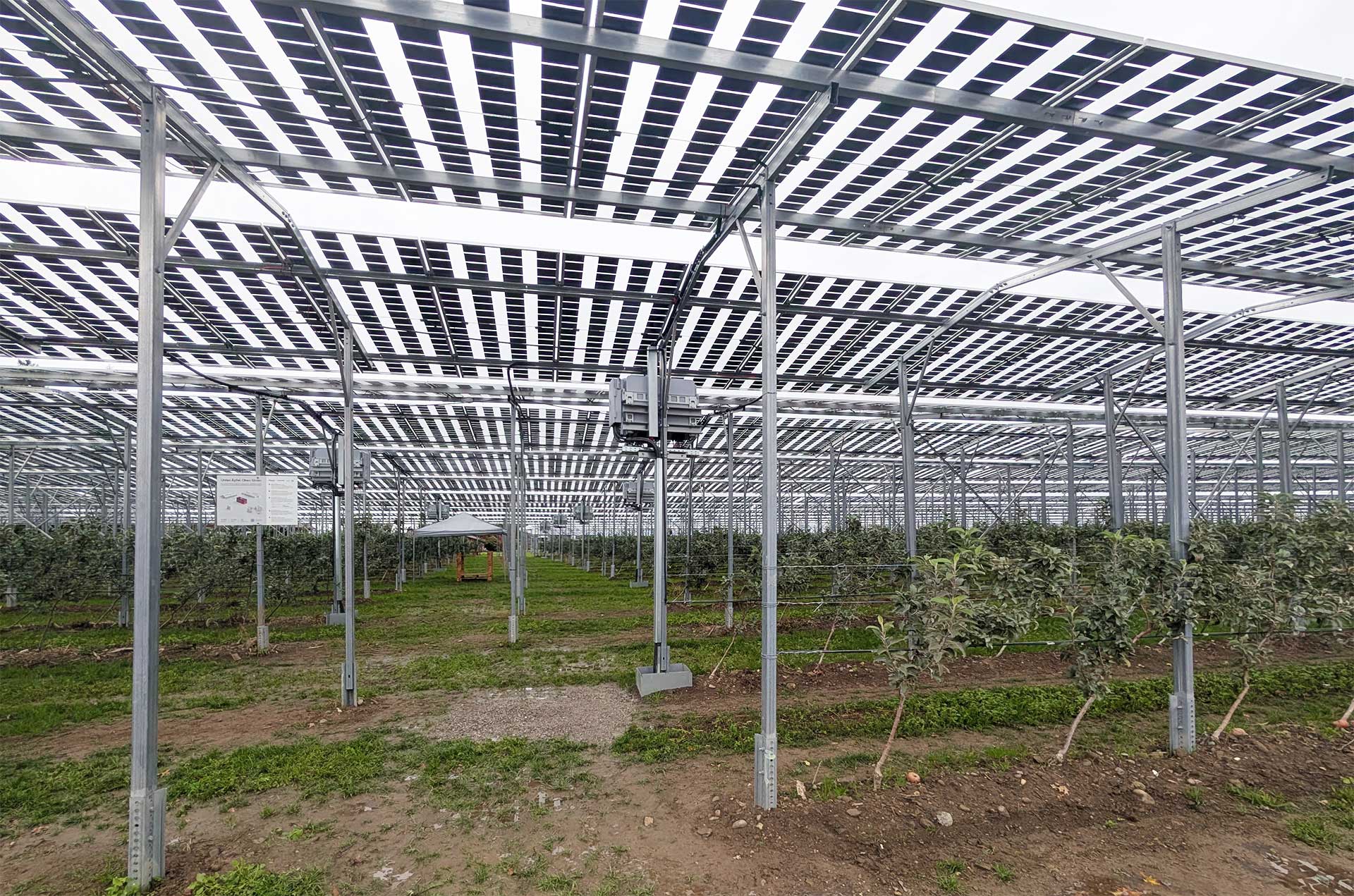
The 2.4 MWp installation features approximately 6,300 semi-transparent solar modules mounted on a fixed east-west structure covering 2.1 hectares of productive apple-growing land. The project demonstrates how solar energy generation and commercial agriculture can coexist, creating additional value from existing farmland without compromising its agricultural purpose.
Turning Agricultural Protection into Clean Energy Infrastructure
In the Lake Constance region, hail protection is essential to safeguarding apple harvests and maintaining fruit quality. The Kressbronn project takes this requirement a step further by integrating agricultural protection and electricity generation into a single structure.
DMEGC Solar's glass-glass Agri-PV modules provide protection against hail and heavy rainfall while allowing a carefully controlled proportion of sunlight to reach the crops below. Rather than treating light transmission as a fixed compromise, the system is designed to balance the specific light requirements of the orchard with the project's electricity generation objectives.
According to the farm, the installation has also contributed to lower water consumption and reduced plant-protection inputs. Meanwhile, the layout maintains sufficient accessibility for agricultural machinery, ensuring that essential operations such as pruning and harvesting can continue beneath the solar structure.
A Business Model Beyond Subsidies
The Kressbronn project also demonstrates the commercial potential of Agri-PV beyond conventional feed-in tariff incentives.
Germany's dedicated Agri-PV bonus, originally set at €0.025 per kWh, remains subject to EU state-aid approval, while the pending EEG amendment proposes reducing the incentive to €0.005 per kWh. The Kressbronn installation, however, does not rely on either incentive.
Instead, its economic model is built around the dual use of infrastructure. The protective structure serves a function that the farm would otherwise need to finance independently, while also generating renewable electricity. Combined with on-site energy consumption and storage arrangements, this approach creates additional revenue opportunities and strengthens the project's overall business case.
Local Energy Consumption Creates Additional Value
A significant proportion of the electricity generated is consumed directly by a nearby agricultural business rather than being exported to the public grid.
Approximately one-third of the plant's electricity output is delivered through a 500-metre direct cable to BayWa Obst's apple sorting and packing facility under an on-site power purchase agreement (PPA).
This arrangement enables locally generated renewable electricity to be consumed directly in the fruit processing operation, avoiding grid fees and levies associated with conventional grid-based electricity supply while establishing a direct link between energy production and agricultural demand.
Award-Winning Project with Potential for Wider Applications
Earlier in October, the Kressbronn installation secured second place in the inaugural Zukunftspreis Deutsche Energie, recognizing its innovative approach to combining renewable energy generation with agricultural production.
For DMEGC Solar, the project highlights the importance of application-specific solar technology. By combining optimized light transmission with mechanical durability, Agri-PV modules can transform agricultural protection infrastructure into productive energy-generating assets.
The potential extends well beyond apple orchards. Similar solutions could be applied to berry cultivation, livestock farming and other agricultural environments, opening new opportunities for the wider adoption of agrivoltaics across Europe.
Advancing Agri-PV Technology with Greater Design Flexibility
Earlier this year, DMEGC Solar further strengthened its Agri-PV portfolio with the introduction of G12RT-format-based solutions.
The upgraded portfolio offers a broad range of light-transmission options, with transparency levels ranging from 2% to 50%. This flexibility allows project developers and agricultural operators to tailor module configurations to different crop requirements, local climatic conditions and electricity generation targets.
Through continuous product innovation and application-driven design, DMEGC Solar aims to support the development of Agri-PV projects that deliver value for both agriculture and renewable energy production.

Tel: +86-579-86588826 (Working hours 8:30-17:00 GMT+08:00)
Tel: +31 (0) 8 58200765
Tel: +86-579-86310330 (Working hours 8:30-17:00 GMT+08:00)
+86-579-86310330 (Working hours 8:30-17:00 GMT+08:00)
+86-579-86588601 (Working hours 8:30-17:00 GMT+08:00)


Contact Us
Type of your question
- Business Consulting
- Technical Support
- After-sales Service