

The photovoltaic industry is undergoing a major technological transformation as n-type solar panels rapidly replace conventional p-type products worldwide. Unlike traditional boron-doped cells, n-type panels use phosphorus-doped silicon wafers with electrons as the majority charge carriers, which fundamentally alters their performance characteristics. This technological shift is reshaping energy economics, project financing criteria, and manufacturing strategies across the global solar supply chain.
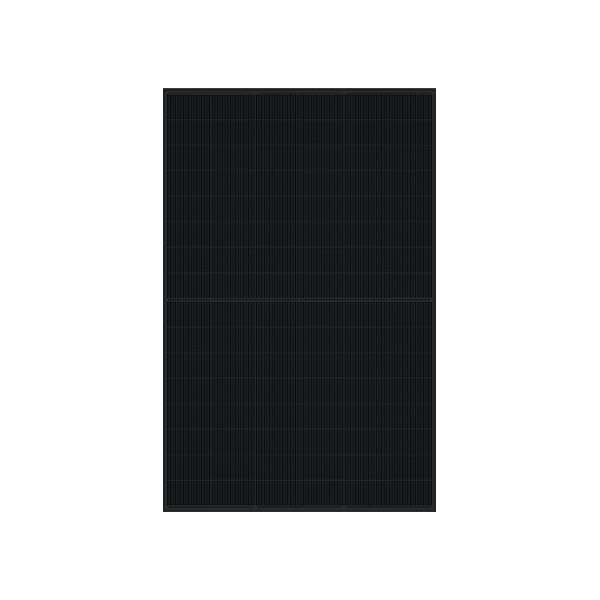
Superior Efficiency and Lower Degradation Drive Adoption
The fundamental advantage of N type solar panels lies in their higher conversion efficiency and significantly lower degradation rates. Current commercial n-type cells achieve efficiencies between 22% and 26%, surpassing p-type cells by 1 to 3 absolute percentage points. This difference translates into measurable energy gains—on a 10 kW residential system, n-type panels produce 400 to 900 additional kilowatt-hours annually compared to comparable p-type alternatives. Beyond efficiency, n-type solar panels exhibit superior resistance to light-induced degradation. The absence of boron-oxygen complexes, which plague p-type cells, means first-year degradation stays below 1% for n-type products, while annual degradation thereafter remains around 0.4%. DMEGC Solar manufactures n-type modules with a 30-year linear performance warranty guaranteeing minimum 87.4% of original output after three decades, ensuring long-term energy yield stability.
Market Penetration Accelerates as N-Type Becomes Mainstream
N-type solar panels have moved from niche technology to industry standard at remarkable speed. Industry data indicates n-type technology penetration surged from 35% in 2024 to 97% by 2026, fundamentally reshaping global solar manufacturing. As of early 2026, n-type accounts for nearly 85% of global production, while mono PERC has declined to less than 5%. This transition has been enabled by the compatibility of technology with existing PERC production lines, reducing the capital expenditure barrier for manufacturers seeking to upgrade. DMEGC Solar has expanded its n-type cell capacity to 14.5 GW across multiple facilities, with their Sichuan base upgrading from 6 GW to 8.5 GW of annual n-type production capacity. The company’s cumulative module shipments have exceeded 50 GW, reflecting sustained market demand for n-type solar panels across utility, commercial, and residential applications.
Enhanced Temperature Performance and Bifacial Gains
Another transformation driver for n-type solar panels is their superior performance under real-world operating conditions. The temperature coefficient of n-type cells typically ranges from -0.29% to -0.30% per degree Celsius, compared to -0.35% to -0.40% for p-type cells. In hot climates, this difference can generate 1.5% to 2% higher annual energy output from the same nameplate capacity. Additionally, n-type solar panels achieve higher bifaciality ratios, often reaching 80% to 90%, meaning the rear side captures significantly more reflected light. DMEGC Solar’s Infinity RT series n-type modules integrate advanced tunnel oxide passivation technology, achieving module efficiencies up to 23.5% with dual-glass construction rated for extreme environmental conditions. Their products have obtained ISO, IEC, and TUV certifications, along with PVEL recognition for reliability under mechanical stress, thermal cycling, and damp heat testing.
N-type solar panels are transforming global energy markets through superior efficiency, reduced degradation, better temperature coefficients, and higher bifacial gains. Market penetration exceeding 97% confirms this technology has become the new industry benchmark. DMEGC Solar manufactures n-type modules backed by 30-year power warranties, 14.5 GW of annual cell capacity, and certifications from ISO, IEC, and TUV. Their double-glass n-type products serve utility-scale, commercial, and residential projects worldwide, supported by a parent company with €12.06 billion in annual revenue and Bloomberg Tier 1 recognition. For investors, developers, and asset owners, transitioning to n-type solar panels represents a scientifically sound choice for long-term energy production and financial returns.

Tel: +86-579-86588826 (Workday 8:30-17:00)
Tel: +31 (0) 8 58200765
Tel: +86-579-86310330 (Workday 8:30-17:00)
+86-579-86310330 (workday 8:30-17:00 GMT+08:00)
+86-579-86588601 (workday 8:30-17:00 GMT+08:00)


Contact Us
Type of your question
- Business Consulting
- Technical Support
- After-sales Service