

Selecting industrial solar panels requires a systematic evaluation of multiple technical and financial factors. For businesses planning to invest in solar energy, understanding the key decision criteria helps avoid costly mistakes and ensures long-term returns. This buying guide outlines the essential aspects that buyers should examine before making procurement decisions.
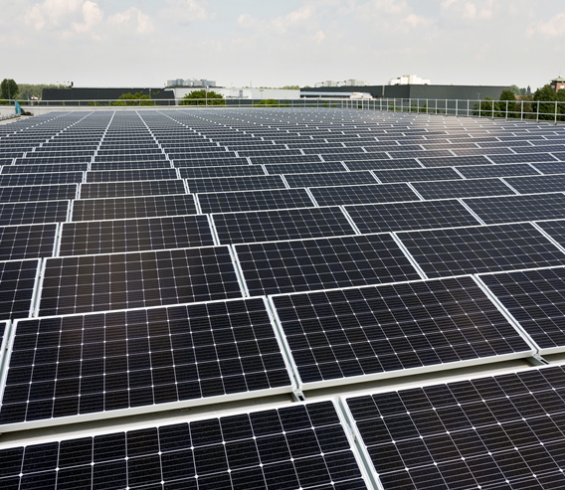
Evaluate Module Technology and Performance Specifications
When sourcing industrial solar panels, the first step involves comparing module efficiency and degradation characteristics. Higher efficiency panels generate more power per square meter, which matters for facilities with limited roof area. Monocrystalline silicon modules typically offer the highest efficiency among commercial options. Buyers should also examine the annual degradation rate, as this directly affects long-term energy output. Quality industrial solar panels maintain a first-year power retention of 99%, with annual degradation around 0.4% to 0.5% in subsequent years. DMEGC Solar manufactures cells and modules across six production bases including Hengdian, Sihong, Yibin, and Indonesia. Their double-glass modules carry a 25-year product warranty and 30-year power warranty, providing extended protection for industrial applications. These specifications help businesses calculate realistic lifecycle energy production and return on investment.
Verify Certifications and Reliability Testing
Industrial solar panels must withstand harsh environmental conditions including thermal cycling, mechanical stress, damp heat, and hail impact. Authorized certifications from recognized bodies verify that modules meet international safety and performance standards. The IEC 61215 standard serves as the global benchmark for PV module design qualification and type approval, covering rigorous stress testing procedures. DMEGC Solar has obtained core system and product certifications including ISO, IEC, and TUV. They are also among the early companies to receive French low-carbon certification for module lifecycle assessment. Additionally, PVEL recognition as a “Top Performer” in module reliability scorecards indicates proven durability under accelerated stress tests. These credentials help buyers distinguish between products that merely claim reliability and those that have demonstrated it through independent verification.
Assess Manufacturer Financial Health and Bankability
A less visible but critical factor in industrial solar panels buying decisions involves the supplier’s financial stability. Modules may last 25 to 30 years, but if the manufacturer exits the market, warranty claims become worthless. The Altman Z-Score provides a quantitative measure of corporate credit strength based on profitability, leverage, liquidity, and solvency ratios. A score above 2.6 indicates solid financial position, while scores below 1.1 suggest higher bankruptcy risk. DMEGC Solar maintains a leading Altman-Z score ranking among global PV module manufacturers and consistently appears on Bloomberg’s Tier 1 list. BloombergNEF Tier 1 status requires manufacturers to have supplied self-branded modules to at least six separate solar projects, each financed by different commercial banks through non-recourse debt structures. This recognition demonstrates a supplier’s ability to secure third-party financing, which serves as strong evidence of bankability. DMEGC Solar’s parent company, Hengdian Group, holds six public companies with annual revenue of €12.06 billion, further reinforcing financial reliability.
Choosing industrial solar panels involves balancing module efficiency, degradation rates, independent certifications, and manufacturer financial health. DMEGC Solar provides high-efficiency modules backed by 30-year power warranties, ISO and IEC certifications, and strong Altman-Z score rankings. Their products serve commercial and industrial applications including rooftop installations, carports, and Agri-PV projects. For businesses seeking a dependable supplier, reviewing both technical specifications and financial stability metrics together produces the most informed procurement decision. A rigorous buying process based on these criteria helps secure reliable energy production for decades.

Tel: +86-579-86588826 (Workday 8:30-17:00)
Tel: +31 (0) 8 58200765
Tel: +86-579-86310330 (Workday 8:30-17:00)
+86-579-86310330 (workday 8:30-17:00 GMT+08:00)
+86-579-86588601 (workday 8:30-17:00 GMT+08:00)


Contact Us
Type of your question
- Business Consulting
- Technical Support
- After-sales Service