

Industrial facilities consume large quantities of electricity to power production lines, ventilation systems, lighting, and material handling equipment. As energy costs continue to rise, manufacturing operations face increasing pressure to find reliable and affordable power solutions. Solar panels for factories offer a practical response to these challenges, converting unused roof space into productive energy-generating assets. Manufacturers like DMEGC Solar supply high-efficiency modules with comprehensive certifications and extended warranties, helping industrial operators reduce expenses and improve environmental performance.
1. Substantial Reduction in Factory Electricity Expenses
One of the most immediate advantages of installing solar panels for factories is the significant decrease in monthly utility bills. Industrial electricity tariffs in many regions have reached elevated levels, with German manufacturing facilities paying an average of €0.22 to €0.28 per kilowatt-hour in recent years. A typical factory spends between €150,000 and €500,000 annually on electricity, making energy one of the largest operational costs. By generating on-site power, industrial facilities can offset 50 to 70 percent of their electricity consumption from the grid, producing predictable long-term savings.
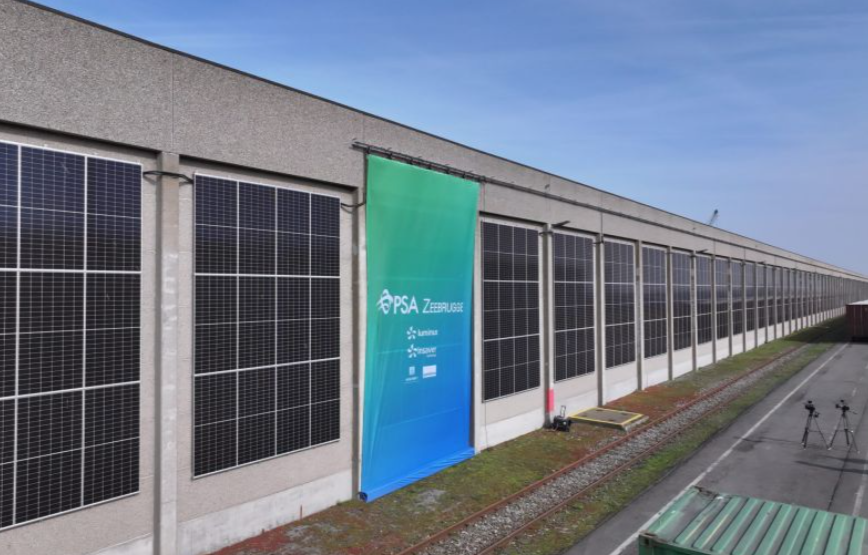
Modern industrial buildings typically feature extensive flat or low-pitch roofs measuring between 2,000 and 20,000 square metres, capable of accommodating large-scale photovoltaic arrays. A factory with a 10,000 square metre roof can install approximately 1,200 to 1,500 kilowatts of solar panels for factories, generating over one million kilowatt-hours annually. Industrial operations that run during daylight hours achieve self-consumption ratios of 60 to 85 percent, meaning most generated electricity directly displaces expensive grid power rather than being exported at low feed-in tariffs. DMEGC Solar’s modules carry a first-year power warranty of 99 percent and a 30-year linear performance warranty on double-glass products, ensuring decades of reliable output.
2. Protection Against Rising Energy Tariffs and Price Volatility
Energy markets remain highly unpredictable, with electricity prices subject to geopolitical events, fuel costs, and regulatory changes. Solar panels for factories provide a hedge against these fluctuations by locking in a stable, predictable power cost for 25 years or more. Once the system is installed, the marginal cost of producing solar electricity approaches zero, insulating factory owners from future tariff hikes and inflation. DMEGC Solar’s products hold extensive international certifications, including TÜV and IEC standards, and the company maintains a consistent presence on the Bloomberg Tier 1 list, reflecting strong financial stability. The Altman-Z score for DMEGC Solar ranks among the highest in the global solar industry, demonstrating a low probability of financial distress and ensuring that warranties remain valid for the full system lifespan.
3. Accelerated Payback and Attractive Financial Returns
Solar panels for factories typically recover investment in three to five years, followed by two decades of lower electricity costs. Government incentives improve economics. In the US, businesses can claim a federal Investment Tax Credit of up to 30%, with bonus credits for domestic content or energy communities. Accelerated depreciation allows first-year deduction of significant system cost, reducing taxable income and improving cash flow.
For a factory with 1,000 kW peak demand and a €8/kW/month demand charge, a 500 kW solar system reducing peak demand to 700 kW saves ~€28,800/year in demand charges alone, plus energy savings. Solar levelized cost is €0.06–0.10/kWh versus industrial grid rates of €0.18–0.32/kWh in Europe.
These economics make solar panels for factories one of the most financially compelling investments for manufacturers.
4. Enhanced Corporate Sustainability and Regulatory Compliance
Manufacturing operations face mounting pressure from customers, investors, and regulators to reduce greenhouse gas emissions and demonstrate environmental responsibility. Solar panels for factories directly replace fossil-fuel-based electricity with clean, renewable power, significantly lowering a facility’s carbon footprint. DMEGC Solar has achieved ISO14068 organizational carbon neutrality certification for its Lianyungang factory, verified by TÜV SÜD as the first such certificate in the photovoltaic industry, with three manufacturing bases operating at 100 percent green energy consumption. The company also holds French low-carbon certification for module life-cycle assessment, verifying reduced environmental impact from raw material extraction to end-of-life recycling.
Factory owners who adopt solar panels for factories can market their products as being manufactured with renewable energy, appealing to environmentally conscious clients and potentially commanding premium pricing. The system also helps facilities comply with existing and forthcoming carbon reporting requirements, avoiding potential penalties and strengthening relationships with sustainability-focused supply chain partners.
5. Long-Term Reliability with Minimal Maintenance Requirements
Solar panels for factories must withstand dust, vibration, temperature extremes, and harsh industrial conditions. DMEGC Solar’s modules have PVEL performance recognition confirming durability. Their double-glass products offer a 25-year product warranty and 30-year power warranty, with anti-PID technology and corrosion-resistant frames. Comprehensive quality management with full traceability ensures high standards.
Factory maintenance teams can perform routine cleaning and visual inspections to keep solar panels for factories at peak efficiency. With local service offices in key markets (Netherlands, Germany, France, Australia, Brazil, Japan, and others), DMEGC provides prompt technical support and spare parts, minimizing downtime and ensuring continuous energy production.
Installing solar panels for factories delivers five measurable advantages: reduced electricity expenses, protection against tariff volatility, accelerated financial returns, enhanced corporate sustainability, and long-term reliability. DMEGC Solar supports industrial customers with high-efficiency modules, Bloomberg Tier 1 financial stability, PVEL performance recognition, and a global service network. Factory owners who integrate solar into their operations not only lower operational costs but also strengthen their competitive position in an increasingly energy-conscious marketplace.

Tel: +86-579-86588826 (Workday 8:30-17:00)
Tel: +31 (0) 8 58200765
Tel: +86-579-86310330 (Workday 8:30-17:00)
+86-579-86310330 (workday 8:30-17:00 GMT+08:00)
+86-579-86588601 (workday 8:30-17:00 GMT+08:00)


Contact Us
Type of your question
- Business Consulting
- Technical Support
- After-sales Service