

A thorough examination of commercial rooftop solar panels requires understanding multiple cost drivers beyond the module price tag. For businesses with suitable roof space, these systems offer predictable energy costs and potential tax benefits, but the initial investment varies significantly based on hardware selection, installation complexity, and long-term performance guarantees. This analysis breaks down the key factors that influence pricing for commercial rooftop solar panels, drawing on verified industry data and manufacturer specifications.
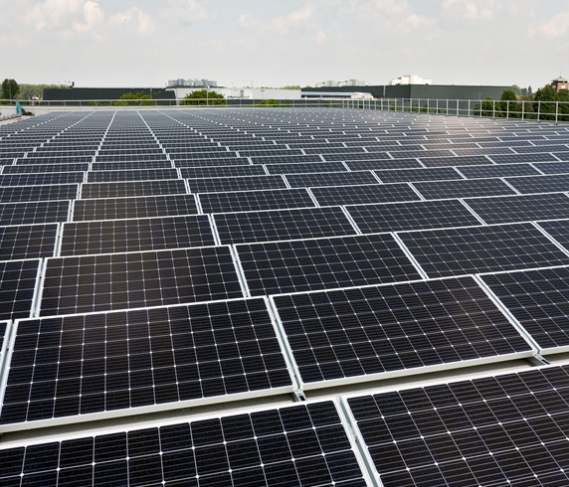
Module Technology and Efficiency Impact on Commercial Rooftop Solar Panels Pricing
The most direct cost factor for commercial rooftop solar panels is the photovoltaic module technology chosen for the installation. Monocrystalline n-type modules command higher upfront prices than conventional p-type PERC products, but they deliver greater energy density per square meter. For commercial roofs with limited area, higher efficiency modules reduce the number of panels and associated mounting hardware needed to meet energy targets. DMEGC Solar manufactures cells and modules with substantial annual capacities, achieving module efficiency up to 23.5 percent with their n-type designs. Their double-glass commercial rooftop solar panels carry a 25-year product warranty and 30-year power warranty, with first-year power retention of 99 percent and annual degradation approximately 0.4 to 0.5 percent thereafter. These specifications mean businesses pay more initially but receive greater lifetime energy output per watt. When comparing commercial rooftop solar panels, buyers should calculate lifecycle energy production rather than focusing solely on lowest price per watt.
Installation Variables That Affect Commercial Rooftop Solar Panels Costs
Beyond module selection, installation-specific factors substantially alter the total price of commercial rooftop solar panels. Roof condition, structural load capacity, and accessibility determine labor hours and materials required. Flat commercial roofs need ballasted racking systems or penetrating mounts with waterproof seals, each with different cost profiles. Older roofs may require reinforcement or replacement before solar installation, adding significant expense. Electrical infrastructure upgrades—such as main panel replacement or transformer adjustments—represent additional cost items for commercial rooftop solar panels. DMEGC Solar has supplied modules for large-scale projects including a 940MW installation in Lianyungang, China, and a 708MW project in Jiangsu, demonstrating their ability to support complex commercial deployments. Their modules have obtained ISO, IEC, and TUV certifications, ensuring compatibility with various inverter brands and monitoring systems. For businesses, obtaining multiple quotes that specify racking types, labor rates, and electrical work helps create an accurate price analysis for commercial rooftop solar panels.
Warranty Terms and Manufacturer Financial Health as Hidden Cost Factors
An often overlooked element in commercial rooftop solar panels price analysis is the long-term value of warranty coverage and the financial stability of the supplier. A lower upfront bid may use modules with shorter warranties or from a manufacturer with weak credit ratings. Commercial rooftop solar panels should carry product warranties of at least 25 years for double-glass construction and linear power warranties of 30 years. DMEGC Solar meets these benchmarks with their double-glass modules. More importantly, the manufacturer must remain solvent for decades to honor those warranties. DMEGC Solar maintains a debt-to-asset ratio of 56.65 percent and appears consistently on Bloomberg’s Tier 1 list. Their parent company, Hengdian Group, generates annual revenue of €12.06 billion and controls six public companies including DMEGC Magnetics and Apeloa Pharmaceutical. For commercial rooftop solar panels, selecting a financially sound supplier protects the business against orphaned warranties. The company’s Altman-Z score ranks among the global PV industry’s strongest, indicating very low bankruptcy risk. This financial health ensures that the 30-year power warranty on commercial rooftop solar panels remains enforceable throughout the system’s operational life.
A complete cost analysis of commercial rooftop solar panels includes module technology efficiency, installation variables such as roof condition and electrical upgrades, and the long-term value of warranties backed by a financially stable manufacturer. DMEGC Solar provides n-type double-glass modules with 23.5 percent efficiency, 30-year power warranties, ISO and IEC certifications, and Bloomberg Tier 1 financial recognition. Their parent company Hengdian Group’s substantial annual revenue and low debt-to-asset ratio offer businesses confidence in lasting support. For any commercial rooftop solar panels project, evaluating all three cost factors together leads to a more accurate price analysis and better investment outcomes.

Tel: +86-579-86588826 (Workday 8:30-17:00)
Tel: +31 (0) 8 58200765
Tel: +86-579-86310330 (Workday 8:30-17:00)
+86-579-86310330 (workday 8:30-17:00 GMT+08:00)
+86-579-86588601 (workday 8:30-17:00 GMT+08:00)


Contact Us
Type of your question
- Business Consulting
- Technical Support
- After-sales Service