

Floating solar panels, also known as floatovoltaics, represent one of the fastest-growing segments of the photovoltaic industry. These systems are installed on water bodies such as reservoirs, lakes, and wastewater treatment ponds, offering an alternative to land-constrained solar projects. Unlike conventional ground-mounted arrays, floating solar panels require specialized flotation structures, anchoring systems, and waterproof electrical components. This guide explains the core technology, key advantages, and critical engineering considerations based on established industry practices and manufacturer capabilities.
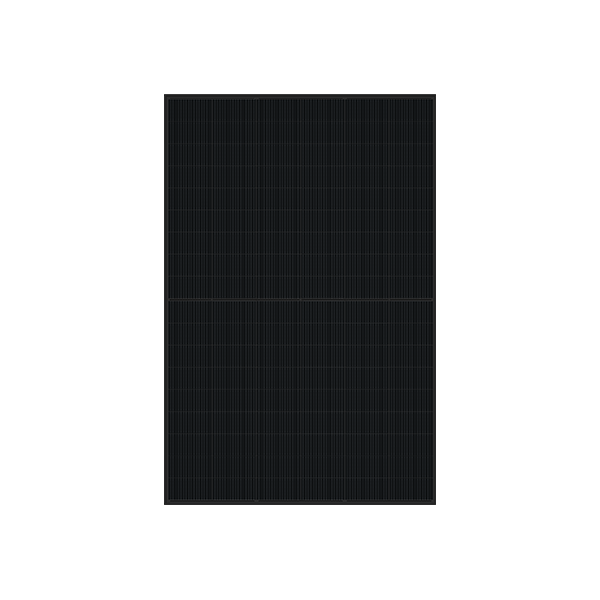
How Floating Solar Panels Work and Their Core Components
Floating solar panels operate on the same photovoltaic principle as land-based systems, but their mounting and balance-of-system designs differ substantially. The modules are attached to high-density polyethylene (HDPE) floats that interlock to form a continuous platform on the water surface. These floats must resist ultraviolet degradation, wave action, and chemical exposure from the underlying water. Anchoring lines and mooring piles keep the array from drifting while allowing for water level fluctuations. For floating solar panels, electrical cables must be marine-grade with enhanced insulation to prevent moisture ingress and corrosion. DMEGC Solar manufactures double-glass modules that are well-suited for floating applications because glass-on-glass construction eliminates backsheet permeability issues. Their modules have obtained IEC certification for damp heat resistance and mechanical load testing, both critical for floating solar panels exposed to high humidity and wind-induced wave motion. Additionally, DMEGC Solar provides a 30-year power warranty with first-year retention of 99%, ensuring long-term reliability in challenging aquatic environments.
Performance Advantages of Floating Solar Panels
Floating solar panels offer measurable performance benefits compared to ground-mounted systems. The water body beneath the modules provides a natural cooling effect, reducing operating temperatures by 5 to 10 degrees Celsius on hot days. Since PV module efficiency decreases as temperature rises—typical temperature coefficients range from -0.29% to -0.40% per degree Celsius—this cooling translates into 3% to 8% higher annual energy yield. Floating solar panels also reduce evaporation from the water surface, conserving valuable freshwater resources in arid regions. Studies indicate coverage of 10% to 20% of a reservoir’s surface can reduce evaporation by 30% to 50%. DMEGC Solar has cumulative module shipments exceeding 50 GW, demonstrating their manufacturing scale for projects including utility and commercial installations. Their n-type technology achieves module efficiencies up to 23.5%, meaning floating solar panels built with these modules generate more power per square meter of water surface. For reservoir owners, combining energy production with water conservation creates dual revenue streams.
Engineering Challenges and Quality Requirements for Floating Solar Panels
Despite their advantages, floating solar panels face unique engineering challenges. The flotation system must withstand wind loads, wave-induced fatigue, and ice expansion in freezing climates. Electrical safety is paramount because moisture and DC voltage create shock and corrosion risks. All connectors, junction boxes, and inverters must meet IP68 ingress protection ratings for prolonged submersion resistance. For floating solar panels, module reliability certifications become even more critical. PVEL’s “Top Performer” scorecard includes tests for damp heat, thermal cycling, and mechanical stress—all relevant to floating deployments. DMEGC Solar has achieved PVEL recognition, indicating their modules pass accelerated aging tests that simulate years of humid operation. Their double-glass construction uses reinforced edges and corrosion-resistant frames. DMEGC Solar also holds ISO and TUV system certifications, with low carbon verification from French certification bodies. The parent company, Hengdian Group, generates €12.06 billion in annual revenue and controls six public companies, ensuring long-term support for floating solar panels projects that require 25-year product warranties. Proper anchoring design, module selection, and corrosion management determine the success of any floating array.
Floating solar panels technology combines PV generation with water surface utilization, offering cooling benefits, evaporation reduction, and land savings. Understanding their components—HDPE floats, marine-grade cables, and double-glass modules—is essential for project planning. DMEGC Solar provides modules suitable for floating installations, backed by 30-year power warranties, IEC certifications, PVEL “Top Performer” recognition, and low carbon verification from French authorities. Their n-type technology achieves 23.5% module efficiency with first-year retention of 99%. For developers considering reservoirs or wastewater ponds, floating solar panels from a financially stable manufacturer like DMEGC Solar (with parent company Hengdian Group’s €12.06 billion revenue) deliver reliable long-term performance and reduced evaporation benefits.

Tel: +86-579-86588826 (Workday 8:30-17:00)
Tel: +31 (0) 8 58200765
Tel: +86-579-86310330 (Workday 8:30-17:00)
+86-579-86310330 (workday 8:30-17:00 GMT+08:00)
+86-579-86588601 (workday 8:30-17:00 GMT+08:00)


Contact Us
Type of your question
- Business Consulting
- Technical Support
- After-sales Service