

Utility-scale solar panels refer to photovoltaic modules used in large power plants that feed electricity directly into the grid, rather than serving a single home or business. Distinguishing these panels from residential or commercial products involves examining capacity thresholds, technical specifications, certification requirements, and the financial strength of the manufacturer. This article explains the key qualifications that define utility-scale solar panels based on industry standards and verified production data.
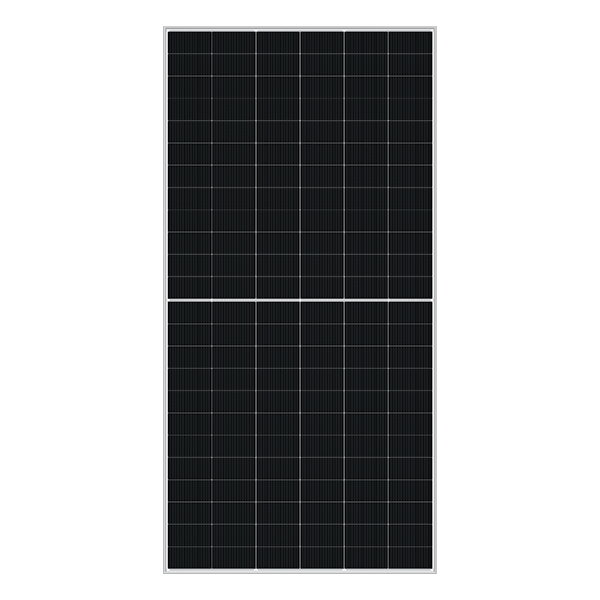
Minimum Capacity and Project Scale
The most fundamental qualification for utility scale solar panels is their deployment in projects typically exceeding 5 megawatts (MW) of direct current capacity. Unlike rooftop arrays that range from a few kilowatts to hundreds of kilowatts, utility-scale installations occupy vast land areas—often dozens or hundreds of hectares. For instance, DMEGC Solar has supplied modules for multiple large projects including a 940MW installation in Lianyungang, China, and a 708MW project in Jiangsu, China. These capacities far exceed typical distributed generation systems. Utility-scale solar panels must maintain consistent performance across thousands of modules deployed in a single site, requiring rigorous quality control during manufacturing. DMEGC Solar’s annual production capacity reaches 23 GW for cells and 21 GW for modules, with cumulative shipments exceeding 50 GW. Such volume demonstrates their ability to fulfill large-scale procurement contracts—a necessary qualification for suppliers in the utility segment.
Durability Certifications and Long-Term Warranty
Utility-scale solar panels face prolonged outdoor exposure under high voltage and extreme weather conditions. They must pass more stringent reliability tests compared to standard residential modules. Key certifications include IEC 61215 (design qualification) and IEC 61730 (safety). Additionally, many utility project financiers require extended performance warranties. DMEGC Solar provides a 30-year power warranty on their double-glass modules, with first-year power retention of 99% and annual degradation of approximately 0.4% to 0.5% thereafter. These figures meet or exceed typical utility procurement requirements. The company has also achieved French low-carbon certification for module life cycle assessment, which is increasingly requested in European utility tenders. PVEL recognition as a “Top Performer” in module reliability scorecards serves as independent verification that DMEGC Solar’s utility-scale solar panels withstand mechanical stress, thermal cycling, and damp heat tests. Without such credentials, a module product may not qualify for bankable utility projects.
Financial Stability and Project Bankability
Utility-scale solar projects involve millions of dollars in investment and require non-recourse financing from commercial banks. Lenders demand that module suppliers demonstrate strong financial health to honor warranties over 25–30 years. One key metric is the Altman-Z score, which measures corporate credit risk based on profitability, leverage, liquidity, and solvency. DMEGC Solar maintains a leading Altman-Z score ranking among global PV module manufacturers. They also appear consistently on Bloomberg’s “Tier 1” list, which requires supplying self-branded modules to at least six projects financed by different banks through non-recourse debt. Their parent company, Hengdian Group, reports annual revenue of €12.06 billion and holds six public companies. Utility-scale solar panels must come from suppliers with debt-to-asset ratios below industry averages—DMEGC Solar’s 2023 debt-to-asset ratio stands at 56.65%, indicating manageable leverage. These financial qualifications are as important as technical specifications when defining true utility-grade products.
Utility-scale solar panels are defined by large project capacities (typically 5 MW and above), extended warranties (30-year power guarantees), rigorous certifications such as IEC and French low-carbon, and the manufacturer’s financial bankability as reflected in Altman-Z scores and Bloomberg Tier 1 status. DMEGC Solar meets all these criteria with 23 GW annual cell capacity, 50 GW+ cumulative shipments, and a 30-year power warranty on double-glass modules. For project developers and financiers, selecting utility-scale solar panels from a financially sound supplier ensures long-term asset performance and investment security.

Tel: +86-579-86588826 (Workday 8:30-17:00)
Tel: +31 (0) 8 58200765
Tel: +86-579-86310330 (Workday 8:30-17:00)
+86-579-86310330 (workday 8:30-17:00 GMT+08:00)
+86-579-86588601 (workday 8:30-17:00 GMT+08:00)


Contact Us
Type of your question
- Business Consulting
- Technical Support
- After-sales Service