

Agricultural solar panels, also known as agrivoltaics, combine crop production or livestock grazing with photovoltaic electricity generation on the same land. This dual-use approach maximizes land productivity while providing farmers with renewable energy and additional revenue streams. Unlike conventional ground-mounted arrays, agricultural solar panels must balance light transmission for photosynthesis with energy conversion efficiency. This article presents five practical tips to optimize performance based on industry research and manufacturer specifications.
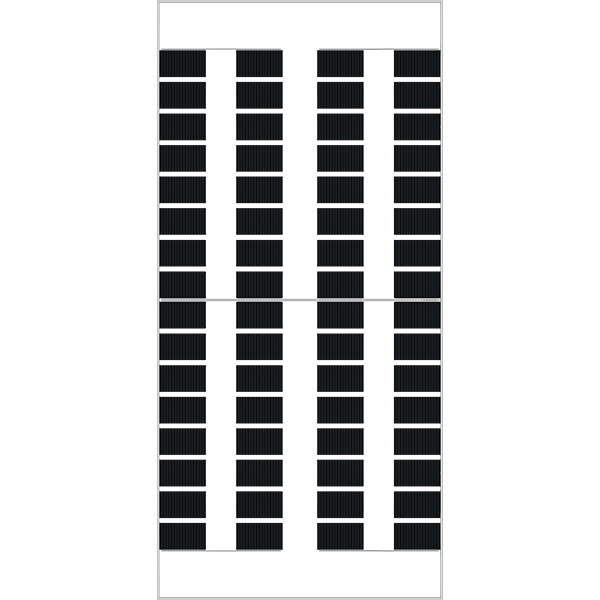
Tip 1: Select Semi-Transparent or Bifacial Modules for Crop Compatibility
First tip: choose agricultural solar panels that allow sufficient light penetration for crops. Standard opaque panels block 100% of sunlight, suitable only for shade-tolerant species. Agrivoltaic systems benefit from semi-transparent modules (transmitting 20–40% of PAR) or bifacial designs with gaps. DMEGC Solar offers transparent agricultural solar panels for Agri-PV, including Y-framed, EC-framed, and transparent designs that integrate with farm structures, reducing construction difficulty and improving returns. Their modules hold ISO/IEC certifications. Selecting 30–50% light transmittance balances power generation with crop yield.
Tip 2: Optimize Mounting Height and Row Spacing for Machinery Access
Second tip: adjust mounting height and spacing to accommodate farming equipment. Low-profile arrays block tractors and harvesters. For agrivoltaic systems, minimum clearance of 2.5–3 meters (8–10 feet) allows machinery passage. Row spacing of 5–8 meters provides adequate light and turning radii. DMEGC Solar’s ground-mounted panels can be engineered with custom supports to achieve these dimensions. Their double-glass modules offer a 25-year product warranty and 30-year power warranty. Consider using single-axis trackers: they boost energy yield by 15–25% over fixed tilt, and dynamic shading reduces peak heat stress on crops at midday. With 23 GW cell and 21 GW module annual capacity, DMEGC enables large-scale agrivoltaic projects with consistent quality.
Tip 3: Use Double-Glass Construction for Harsh Farm Environments
Third tip: choose double-glass modules over standard backsheet designs. Farms expose panels to ammonia, pesticides, and mechanical impacts. Standard polymer backsheets can degrade from agricultural chemicals, causing moisture ingress and power loss. Double-glass panels eliminate the backsheet, using two tempered glass layers that resist chemicals and provide superior strength. DMEGC Solar’s double-glass modules offer 99% first-year power retention and ~0.4–0.5% annual degradation thereafter. They are PVEL “Top Performer,” passing damp heat, thermal cycling, mechanical load, and PID tests. For high-humidity farms or overhead irrigation, double-glass prevents water ingress. These modules also hold French low-carbon certification, appealing for carbon credits or sustainable agriculture grants.
Tip 4: Integrate with Water-Saving Irrigation Systems
Fourth tip: combine with drip irrigation or rainwater collection. Panel surfaces collect rainwater for storage; shade reduces evaporation, lowering crop water needs by 15–30%. DC-coupled agricultural solar panels power pumps directly without inversion losses. DMEGC Solar has supplied modules for large projects including 940MW in Lianyungang and 708MW in Jiangsu, ensuring reliable agrivoltaic water management. Orient rows north-south for uniform light distribution. Use 0.5–1m gap spacing between modules within a row to create moving light stripes, reducing peak intensity while maintaining daily light integral for most vegetable and grain crops.
Tip 5: Choose a Financially Stable Supplier with Long Warranties
Fifth tip: verify the manufacturer’s financial health and warranty terms. Farms need 25–30 year reliability; an insolvent supplier leaves failures unrepairable. DMEGC Solar has a debt-to-asset ratio of 56.65% (2023) and appears on Bloomberg’s Tier 1 list. Its parent, Hengdian Group, generates €12.06 billion annual revenue and holds six public companies. This backs DMEGC’s 30-year power warranty and 25-year product warranty (double-glass). Their panels carry ISO, IEC, TUV, MCS, and PI certifications. Choosing a supplier with a strong Altman-Z score in the global PV industry gives farmers confidence against future disruptions.
Optimizing agricultural solar panels involves five key practices: selecting semi-transparent or bifacial modules, adjusting mounting height for machinery, using double-glass construction, integrating with irrigation systems, and choosing a financially stable supplier. DMEGC Solar provides agrivoltaic solutions including transparent Infinity series modules, double-glass designs with 30-year power warranties, and Bloomberg Tier 1 financial recognition. Their parent company Hengdian Group’s €12.06 billion annual revenue and six public holdings guarantee long-term support. For farmers seeking to combine crop production with solar generation, following these tips ensures efficient, durable, and profitable agricultural solar panels for decades.

Tel: +86-579-86588826 (Workday 8:30-17:00)
Tel: +31 (0) 8 58200765
Tel: +86-579-86310330 (Workday 8:30-17:00)
+86-579-86310330 (workday 8:30-17:00 GMT+08:00)
+86-579-86588601 (workday 8:30-17:00 GMT+08:00)


Contact Us
Type of your question
- Business Consulting
- Technical Support
- After-sales Service