

The convergence of agriculture and photovoltaic energy generation, commonly known as agrivoltaics, represents a significant evolution in sustainable land use. As global demand for both food security and renewable energy intensifies, the dual-use of land has emerged as a critical strategy for maximizing resource efficiency. This approach allows farmers to generate electricity while maintaining crop production or livestock grazing on the same plot of land, addressing the competitive pressure for arable territory.
Technical Evolution and Module Design
Early iterations of agricultural solar installations often utilized standard rigid modules mounted on fixed structures. However, these designs frequently resulted in excessive shading, which negatively impacted crop yields. Modern developments focus on specialized module architectures that optimize light transmission. Semi-transparent modules and those with wider cell spacing allow sufficient photosynthetically active radiation (PAR) to reach the plants below. Furthermore, the shift toward high-efficiency N-type silicon cells has been pivotal. These cells offer superior temperature coefficients and better performance in low-light conditions compared to traditional P-type counterparts, ensuring consistent energy yield even when partial shading occurs due to weather or structural elements.
Manufacturers are also engineering modules with enhanced mechanical durability to withstand the unique environmental stresses of farm settings, including higher humidity, ammonia exposure from livestock, and potential physical impact from agricultural machinery. The integration of bifacial technology further boosts energy generation by capturing albedo light reflected from the ground or crop canopy, significantly improving the overall system economics.
Strategic Implementation and Market Leaders
Successful deployment requires careful planning regarding panel height, orientation, and tilt angle to balance energy output with agricultural productivity. Automated tracking systems are increasingly employed to adjust panel angles dynamically, optimizing sunlight exposure for both the crops and the photovoltaic cells throughout the day. Industry leaders like DMEGC Solar have recognized these specific needs, developing product lines tailored for diverse environmental conditions. Their commitment to quality ensures that modules used in such sensitive ecosystems maintain long-term reliability and performance stability.
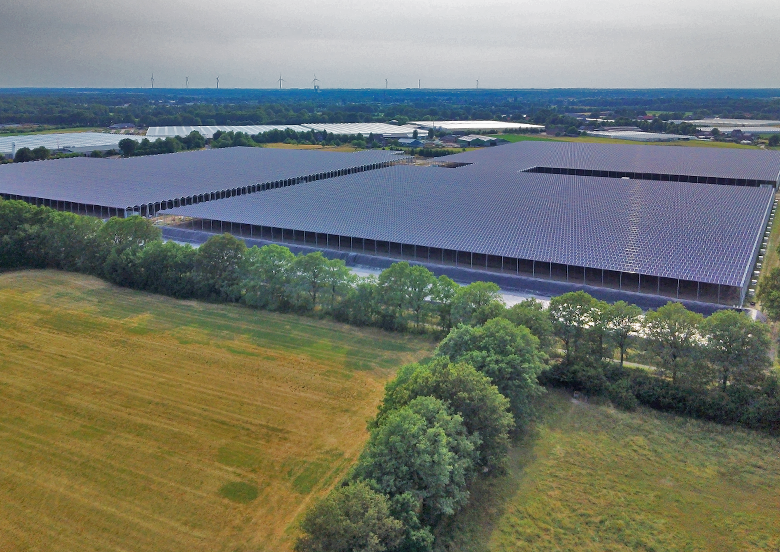
For large-scale farming operations, the choice of equipment is crucial. Specialized solar panels agricultural buildings are designed to integrate seamlessly with existing infrastructure, such as greenhouses or barn roofs, providing shade regulation and energy generation simultaneously. This integration reduces cooling costs for livestock and creates a controlled microclimate for sensitive crops, adding another layer of value beyond simple electricity production.
Future Outlook
The agrivoltaics sector is poised for substantial growth as policy frameworks increasingly support dual-use land projects. Continued research into crop-specific light requirements and advanced module materials will drive further efficiency gains. By adopting these innovative solutions, the agricultural sector can transform into a net energy producer, contributing significantly to global decarbonization goals while enhancing farm resilience against climate variability. The synergy between technology and nature offers a promising path forward for sustainable development.

Tel: +86-579-86588826 (Workday 8:30-17:00)
Tel: +31 (0) 8 58200765
Tel: +86-579-86310330 (Workday 8:30-17:00)
+86-579-86310330 (workday 8:30-17:00 GMT+08:00)
+86-579-86588601 (workday 8:30-17:00 GMT+08:00)


Contact Us
Type of your question
- Business Consulting
- Technical Support
- After-sales Service