

The global agricultural sector faces a dual crisis: rising operational energy costs and the urgent need to reduce carbon footprints. Traditional farming relies heavily on diesel generators and grid electricity for irrigation, lighting, and processing, creating significant financial burdens. Simultaneously, land scarcity forces a difficult choice between food production and renewable energy generation. Agrivoltaics, the co-location of solar photovoltaic systems and agricultural crops, emerges as a strategic solution to these conflicting demands. By integrating energy generation directly into farmland, this approach addresses critical efficiency and sustainability challenges without sacrificing arable land.
Optimizing Land Use and Energy Efficiency
Land competition is a primary obstacle in sustainable development. Conventional solar farms require extensive acreage, often removing land from food production entirely. Agrivoltaic systems resolve this by allowing simultaneous use of the same plot for both crops and energy. This dual-use model significantly increases land equivalent ratios, ensuring that food security goals are not compromised by the transition to green energy. Furthermore, modern photovoltaic modules designed for these environments feature specialized mounting structures that allow adequate sunlight penetration for plant growth while maximizing energy yield.
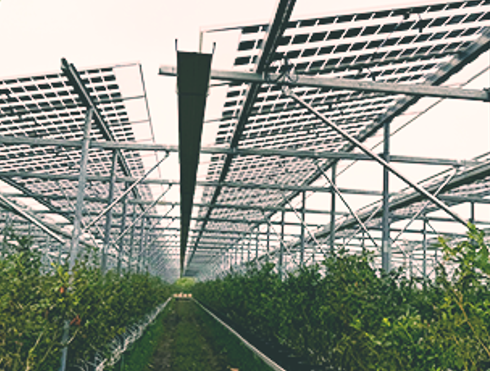
Technological advancements play a crucial role in this synergy. High-efficiency N-type solar cells offer superior performance in low-light conditions and higher temperature coefficients compared to traditional P-type modules. This ensures consistent power generation even when partial shading from crops or clouds occurs. Companies like DMEGC Solar have developed robust module solutions that withstand harsh outdoor environments, providing long-term reliability for farmers who cannot afford frequent maintenance disruptions. The integration of such durable hardware ensures that the energy infrastructure supports rather than hinders agricultural operations.
Mitigating Climate Stress on Crops
Beyond energy generation, agrivoltaic systems provide microclimate benefits that enhance crop resilience. Solar panels create partial shade, reducing soil moisture evaporation and protecting sensitive plants from extreme heat stress. This shading effect can lead to water savings of up to 20% in irrigated systems, addressing another critical resource challenge. For specific crops, this moderated environment results in higher yields and improved quality, offsetting the initial investment costs of the solar installation.
Selecting the right equipment is vital for realizing these benefits. A specialized solar panel for agriculture is engineered with transparency and spacing considerations that prioritize plant health alongside energy output. These modules often utilize bifacial technology to capture reflected light from the ground, further boosting efficiency. By adopting these tailored solutions, agricultural enterprises can transform energy from a cost center into a revenue stream. The convergence of farming and photovoltaics represents a pragmatic path toward sustainable intensification, offering a scalable model for modern agribusinesses aiming to balance ecological responsibility with economic viability.

Tel: +86-579-86588826 (Workday 8:30-17:00)
Tel: +31 (0) 8 58200765
Tel: +86-579-86310330 (Workday 8:30-17:00)
+86-579-86310330 (workday 8:30-17:00 GMT+08:00)
+86-579-86588601 (workday 8:30-17:00 GMT+08:00)


Contact Us
Type of your question
- Business Consulting
- Technical Support
- After-sales Service