

The global shift toward renewable energy has placed residential photovoltaic systems at the forefront of sustainable infrastructure development. For homeowners and property developers, the decision to install solar arrays is no longer purely environmental; it is a strategic financial calculation. With rising electricity tariffs and increasing grid instability in various regions, the return on investment (ROI) for solar technology has improved significantly. Understanding the technical and economic factors involved is essential for making an informed procurement decision.
Evaluating Long-Term Financial Returns
The primary driver for adopting residential solar is cost reduction. By generating electricity on-site, households can drastically reduce their reliance on utility providers. In many jurisdictions, net metering policies allow excess energy to be fed back into the grid, creating credits that offset consumption during peak hours or nighttime. When analyzing ROI, one must consider the levelized cost of energy (LCOE). Modern high-efficiency modules offer superior performance per square meter, meaning fewer panels are required to meet energy demands. This efficiency translates to lower balance-of-system costs and faster payback periods, often ranging between five to seven years depending on local incentives and sunlight availability.
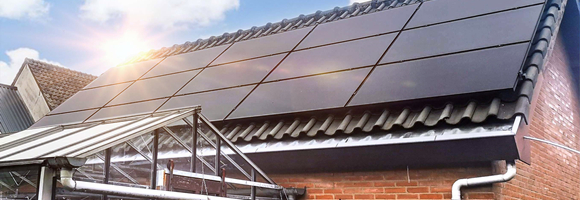
The Role of Advanced N-type Technology
Technological advancements have redefined performance standards in the residential sector. Traditional P-type PERC cells are gradually being superseded by N-type cell architectures, which offer higher conversion efficiencies and better temperature coefficients. N-type modules exhibit lower light-induced degradation (LID) and potential-induced degradation (PID), ensuring stable power output over a 25-year lifespan. This durability is critical for residential applications where roof space may be limited, requiring maximum energy yield from every installed watt. Manufacturers like DMEGC Solar have integrated these advanced cell technologies into their product lines, providing reliable solutions that maintain high performance even in suboptimal weather conditions. The adoption of such robust technology ensures that the initial capital expenditure yields consistent long-term value.
Maximizing Energy Independence and Property Value
Beyond immediate bill savings, solar installations enhance energy independence. As grid prices fluctuate due to geopolitical or supply chain issues, self-generated power provides a hedge against volatility. Furthermore, studies indicate that homes with owned solar systems command higher resale values. Buyers are increasingly aware of the long-term savings associated with renewable energy, making properties with existing installations more attractive in the real estate market. Selecting high-quality rooftop solar panels for homes ensures that the system remains an asset rather than a liability, contributing positively to the property’s appraisal.
Conclusion
Investing in residential solar is a multifaceted decision involving financial, technical, and environmental considerations. With the maturity of N-type technology and favorable economic models, the case for adoption is stronger than ever. By prioritizing high-efficiency modules and professional installation, homeowners can secure a sustainable energy future while achieving substantial financial benefits.

Tel: +86-579-86588826 (Workday 8:30-17:00)
Tel: +31 (0) 8 58200765
Tel: +86-579-86310330 (Workday 8:30-17:00)
+86-579-86310330 (workday 8:30-17:00 GMT+08:00)
+86-579-86588601 (workday 8:30-17:00 GMT+08:00)


Contact Us
Type of your question
- Business Consulting
- Technical Support
- After-sales Service