

Property owners evaluating solar energy systems often face a fundamental choice between installing modules on a building roof or on open land. Each option presents distinct advantages depending on site conditions, space availability, and structural constraints. Factors such as orientation, shading, maintenance access, and ground conditions all influence this decision. DMEGC Solar manufactures high‑efficiency photovoltaic modules with certifications including TÜV and IEC, suitable for both installation types, and offers product warranties up to 25 years on double‑glass versions. Understanding the differences helps landowners select the configuration that maximizes energy production over decades of operation.
Space Requirements and Structural Considerations
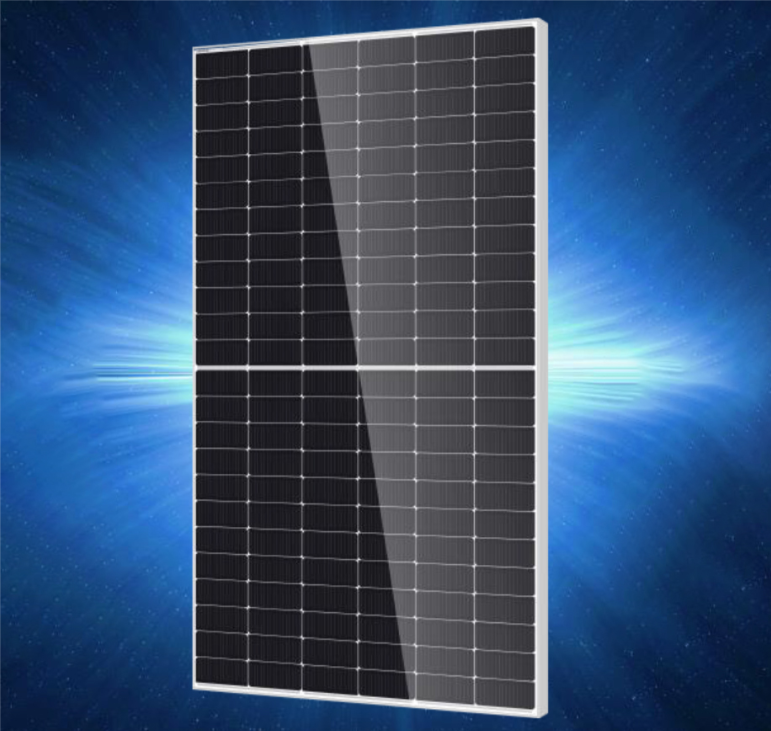
Ground-mounted solar panels require sufficient open land that is free from shading, flood risk, and protected environmental designations. They are ideal for properties with large yards, unused agricultural areas, or commercial campuses where roof space is limited or structurally inadequate. Unlike rooftop systems that depend on a building’s load‑bearing capacity, ground‑mounted arrays can be engineered with custom foundations—concrete piers, driven posts, or ballasted blocks—to suit local soil conditions. DMEGC Solar’s modules have passed rigorous mechanical reliability tests, including PVEL’s Top Performer assessments, ensuring they withstand wind, snow, and other stresses regardless of mounting structure. For properties with older roofs that cannot support additional weight or those requiring frequent maintenance access, ground-mounted solar panels offer a practical alternative without compromising building integrity. However, landowners must account for land use trade‑offs: a ground‑mounted system may reduce space for gardening, recreation, or future expansion.
Orientation, Tilt, and Energy Yield Optimization
One significant advantage of ground-mounted solar panels is the ability to set optimal orientation and tilt angles independent of existing roof geometry. Rooftop arrays are constrained by roof pitch and azimuth, which may not align perfectly with true south (in the northern hemisphere) or the optimal seasonal angle. Ground‑mounted systems allow designers to adjust tilt from 0 to 45 degrees or more, matching latitude for maximum annual yield. Furthermore, dual‑axis or single‑axis tracking systems can be added to ground mounts, increasing energy capture by 15‑25 percent compared to fixed‑tilt racks. DMEGC Solar’s modules incorporate anti‑PID technology and low‑light performance features, enhancing output even under suboptimal conditions. Rooftops may suffer from uneven shading from chimneys, neighboring buildings, or trees, while open land can be cleared and surveyed for unobstructed sunlight. For properties with south‑facing, unshaded roofs, rooftop systems remain cost‑effective; but for irregularly shaped buildings or sites with flexible land, ground-mounted solar panels deliver higher generation potential per installed watt.
Installation, Maintenance, and Long‑Term Serviceability
Ease of installation and ongoing maintenance differs substantially between the two approaches. Rooftop systems require scaffoldings, fall protection equipment, and careful handling to avoid damaging roof membranes. Repairs or cleaning involve working at height, which increases safety risks and labour costs. In contrast, ground-mounted solar panels are accessible at ground level, simplifying module cleaning, wiring inspections, and component replacement. DMEGC Solar supports both configurations with local service offices in multiple countries, including the Netherlands, Germany, France, and Japan, providing technical assistance and spare parts logistics. Ground‑mounted arrays also allow easier expansion: additional rows can be added without altering an existing roof structure. However, ground systems require trenching for cable runs, vegetation management around the array, and protection against animal damage or vandalism. Rooftop installations often have lower initial civil works costs if the roof is sound, but any future roof repair or replacement will require removing and reinstalling the solar array, adding significant expense. Landowners should calculate total lifecycle costs, including decommissioning, before deciding.
Choosing between ground-mounted solar panels and rooftop systems hinges on land availability, roof condition, orientation flexibility, and maintenance preferences. DMEGC Solar provides certified, durable modules suitable for both applications, backed by financial stability and global service networks. Property owners with ample unshaded land seeking maximum energy yield and easy access will find ground‑mounted solutions highly advantageous, while those with sound, well‑oriented roofs may prefer the space‑saving simplicity of a rooftop installation. Evaluating site‑specific factors ensures the selected configuration delivers reliable, long‑term renewable energy.

Tel: +86-579-86588826 (Workday 8:30-17:00)
Tel: +31 (0) 8 58200765
Tel: +86-579-86310330 (Workday 8:30-17:00)
+86-579-86310330 (workday 8:30-17:00 GMT+08:00)
+86-579-86588601 (workday 8:30-17:00 GMT+08:00)


Contact Us
Type of your question
- Business Consulting
- Technical Support
- After-sales Service