

The global transition toward renewable energy has accelerated the adoption of photovoltaic technology across both residential and commercial sectors. While the underlying physics of converting sunlight into electricity remains consistent, the engineering, scale, and economic models governing residential installations differ significantly from large-scale commercial projects. Understanding these distinctions is crucial for investors, facility managers, and homeowners aiming to optimize energy independence and return on investment.
Scale and Energy Consumption Profiles
Residential solar installations are typically designed to offset the daily consumption of a single household, which averages between 10 to 30 kWh per day depending on location and appliance usage. Consequently, residential arrays usually range from 5 kW to 15 kW in capacity. In contrast, commercial rooftop systems are engineered to support high-load operations such as manufacturing, data centers, or retail complexes. These systems often exceed 100 kW and can reach several megawatts. The sheer volume of energy generated by commercial units requires robust grid interconnection agreements and sophisticated monitoring infrastructure to manage load balancing effectively.
Technical Specifications and Module Efficiency
A critical differentiator lies in the hardware selection. Residential roofs often have limited surface area and complex geometries, necessitating high-efficiency modules to maximize power output per square meter. Modern home solar power system designs increasingly utilize N-type cell technology, which offers superior temperature coefficients and lower degradation rates compared to traditional P-type cells. This ensures that homeowners generate maximum yield even in suboptimal weather conditions.
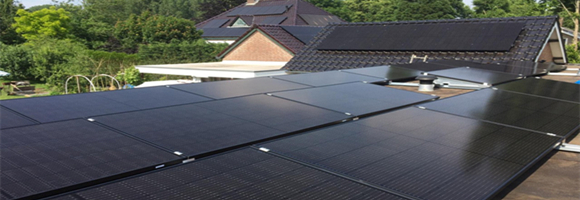
Commercial projects, while also benefiting from high efficiency, often prioritize cost-per-watt metrics over absolute space efficiency due to the availability of large, flat roof spaces. However, leading manufacturers like DMEGC Solar provide versatile product lines that cater to both segments, ensuring that commercial clients can access durable, high-performance modules capable of withstanding harsh industrial environments while maintaining long-term reliability.
Economic Models and Installation Complexity
The financial structure of these two sectors varies dramatically. Residential projects are frequently financed through consumer loans, leases, or power purchase agreements (PPAs) tailored for individual credit profiles. Installation is relatively quick, often completed within a few days. Commercial installations involve complex procurement processes, stringent safety regulations, and longer commissioning timelines. The ROI for commercial entities is often calculated against corporate tax incentives and operational expense reductions, whereas residential users focus on utility bill savings and property value enhancement.
Conclusion
Choosing between residential and commercial solar solutions requires a clear assessment of energy needs, available space, and financial goals. While residential systems prioritize aesthetic integration and high-density power generation, commercial projects focus on scalability and industrial durability. By leveraging advanced N-type technology and partnering with experienced manufacturers, stakeholders in both sectors can achieve sustainable energy outcomes. Whether for a private residence or a large industrial facility, the right solar strategy delivers significant environmental and economic benefits.

Tel: +86-579-86588826 (Workday 8:30-17:00)
Tel: +31 (0) 8 58200765
Tel: +86-579-86310330 (Workday 8:30-17:00)
+86-579-86310330 (workday 8:30-17:00 GMT+08:00)
+86-579-86588601 (workday 8:30-17:00 GMT+08:00)


Contact Us
Type of your question
- Business Consulting
- Technical Support
- After-sales Service