

The global shift toward utility-scale renewable energy has intensified the demand for robust, efficient photovoltaic systems. Among various deployment strategies, ground-mounted arrays offer distinct advantages in terms of scalability and maintenance accessibility. However, successful implementation requires strict adherence to international engineering standards and precise integration protocols. For project developers and procurement managers, understanding these technical benchmarks is essential for ensuring long-term asset performance and return on investment.
Structural Integrity and Site Assessment
The foundation of any successful solar farm lies in rigorous site assessment and structural design. Unlike rooftop installations, ground-mounted systems must withstand diverse environmental stressors, including wind loads, snow accumulation, and soil corrosion. Engineers typically utilize hot-dipped galvanized steel or aluminum alloys for mounting structures to ensure durability against harsh weather conditions. The tilt angle and azimuth orientation are calculated based on geographic latitude to maximize annual energy yield. Furthermore, geotechnical surveys are mandatory to determine the appropriate foundation type, whether it be pile-driven, ballasted, or screw-in anchors. This phase ensures that the mechanical load is distributed evenly, preventing structural fatigue over the system’s twenty-five-year lifespan. Leading manufacturers like DMEGC Solar emphasize the importance of matching module mechanical specifications with mounting hardware to maintain warranty validity and structural safety.
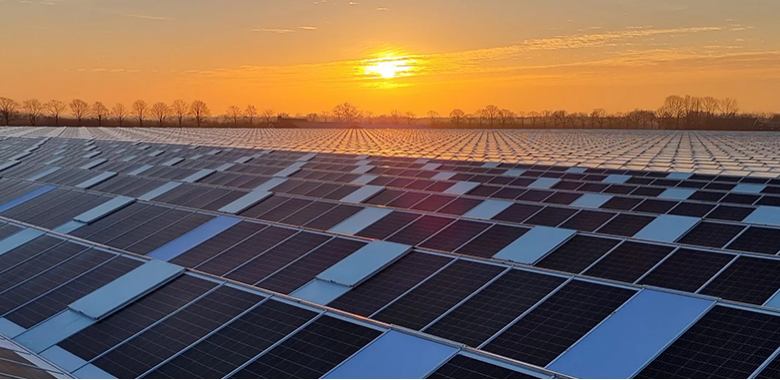
Electrical Integration and N-type Module Efficiency
Electrical integration involves more than just connecting wires; it requires optimizing the entire balance of the system (BOS) for minimal energy loss. Modern utility-scale projects increasingly favor high-efficiency modules to reduce the levelized cost of energy (LCOE). Specifically, N-type technology has gained prominence due to its superior temperature coefficient and lower degradation rates compared to traditional P-type cells. These advanced cells offer higher bifaciality factors, allowing them to capture reflected light from the ground surface, which significantly boosts total energy generation. When selecting Ground-mounted Solar Panels, engineers must consider compatibility with inverters and combiner boxes to ensure seamless grid synchronization. Proper cable management, grounding, and surge protection are also critical to safeguarding the array against lightning strikes and electrical faults.
Conclusion
Adhering to strict installation standards and leveraging advanced photovoltaic technologies are paramount for the success of large-scale solar projects. By focusing on structural resilience and efficient electrical integration, stakeholders can maximize energy output while minimizing operational risks. As the industry evolves, the adoption of high-performance N-type modules and robust mounting solutions will continue to define the benchmark for reliable, sustainable energy infrastructure.

Tel: +86-579-86588826 (Workday 8:30-17:00)
Tel: +31 (0) 8 58200765
Tel: +86-579-86310330 (Workday 8:30-17:00)
+86-579-86310330 (workday 8:30-17:00 GMT+08:00)
+86-579-86588601 (workday 8:30-17:00 GMT+08:00)


Contact Us
Type of your question
- Business Consulting
- Technical Support
- After-sales Service